
Hello everyone.
Here are the results of the 2025 JUCE User Survey.
This time around we added more questions about your developer environments and practices. I hope you enjoy looking through all of the data.
Licensing
The responders license breakdown:

Note that educational license holders were added to the “Free” category to simplify the rest of the statistics.
About you


This year, we asked people where they are based:

Your Development Stack
Most JUCE users do their work on macOS these days:

Almost 2/3rds of you are CMake users, but Projucer is holding its ground, especially with users on Free plans.

JUCE users are overwhelmingly git literate!

As far as C++ IDEs, first party IDEs Xcode and Visual Studio are most dominant, but a solid 20% of you prefer CLion.

Only about 13% of users are currently building apps/plugins with Webviews, but many are interested.

The top 5 dependencies in your JUCE WebView frontend stacks:
-
React (over 38 mentions)
-
Tailwind
-
Vite
-
Vue
-
Shadcn
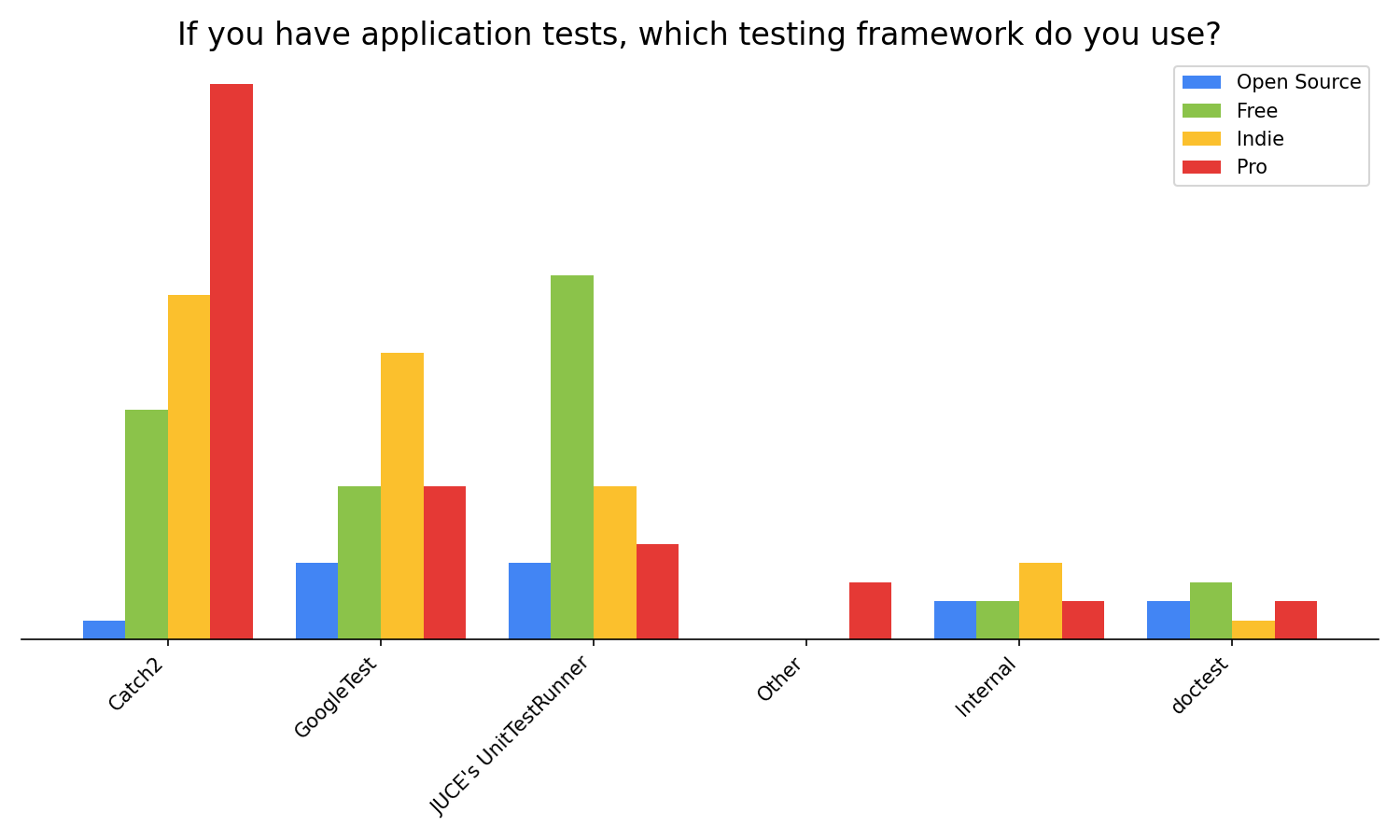
Catch2 was the most popular test framework, with GoogleTest and JUCE’s UnitTestRunner tied for second. An unsurprising minority of respondents implement their own test setup (Internal).
A clear majority of plugin devs (over 2/3rds of respondents) use pluginval and over 1/3rd run it on every build before release:

Only about 20% of you responded that you use paid testers for QA (mainly people on the Pro plan, which makes sense). A majority had private testers and/or relied on the devs for QA:

Toolchains


Re: Installers, most people used Packages.app or Apple’s tooling, with a small handful of write-ins saying some other custom options, like a JUCE Standalone app, custom script, or via the Mac App Store.

Windows installers have converged on InnoSetup, but WiX and NSIS get a showing and there’s lots of variety in the long tail:

Product Requirements
Many of you (27%) support macOS down to 10.11 (released 10 years ago).

Even for new projects on the latest JUCE, many of you said you’d like to support down to macOS 10.11.

The majority of you support Windows down to version 10 (released 2015), with 15% supporting Windows 8.1 (2013, JUCE 8’s minimum requirement) and 10% still supporting Windows 7 (2009).

For new projects, about 10% of you said you’d still want to support Windows 8.1.

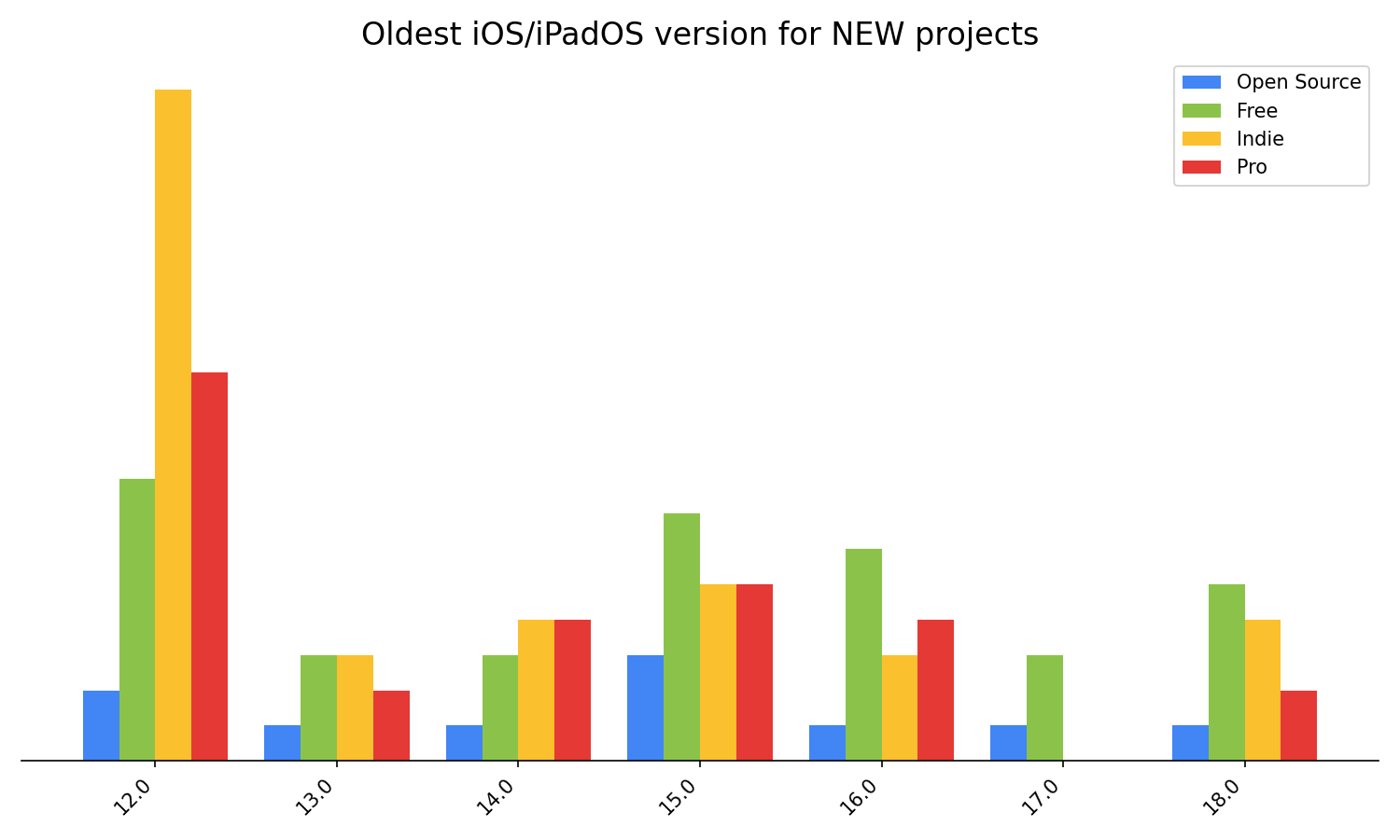
Most of you support down to 12.0 on iOS/iPadOS.

And that stays the same on new projects.
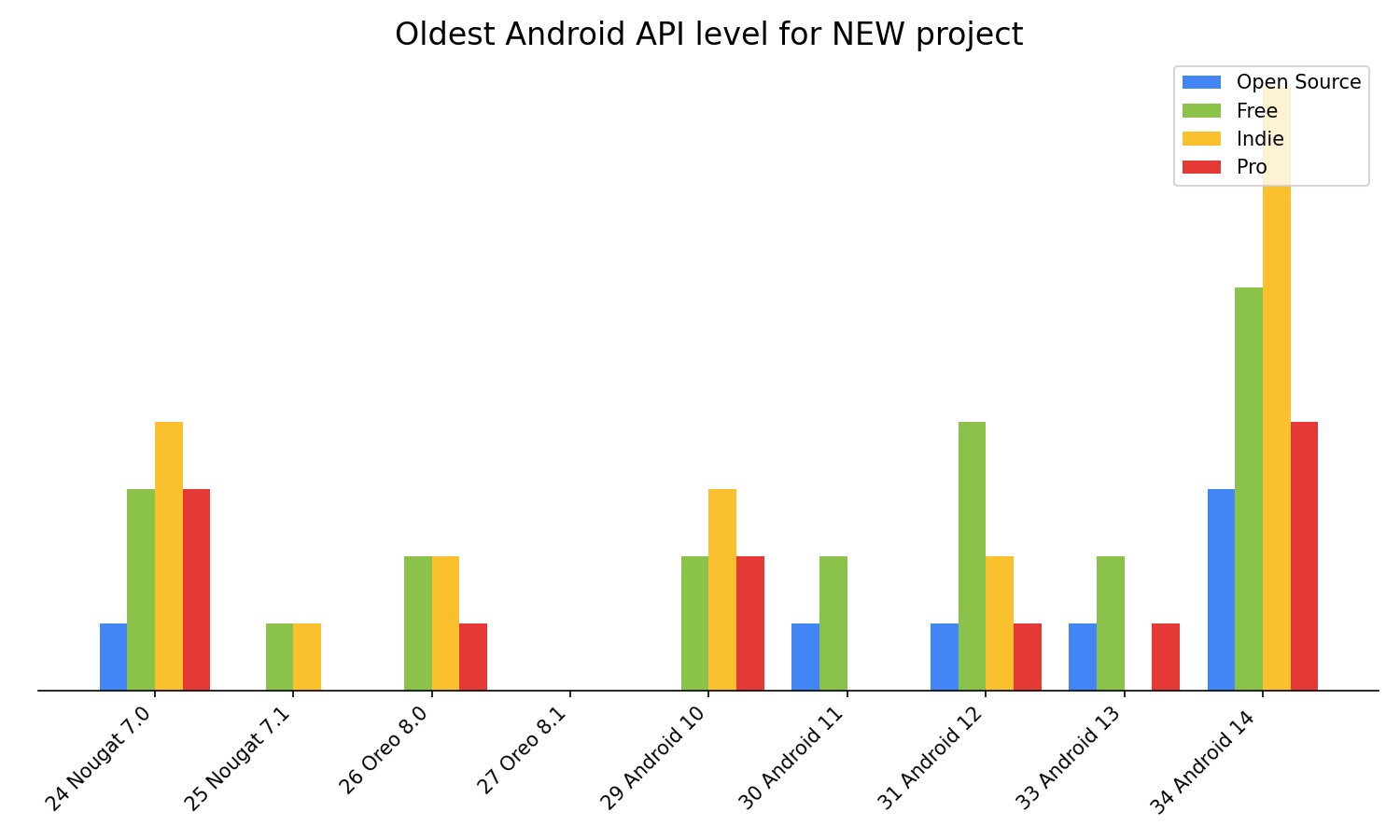
Android is more varied:

When asked for detail on OS needs, people asked for more support for iOS and Android (check out latest develop for some big updates to Android) as well as expressed that they like to run JUCE on the macOS betas (macOS26 beta support is on develop now, please test it out!).


A small group of users wished for even more Windows backwards compatibility (i.e. Win 7 support in JUCE 8), which unfortunately won’t be possible — the Direct2D APIs that JUCE 8 relies on are Win 8.1 and later. There’s only so many OS and APIs and renderers that we can maintain without becoming spread too thin.
Dependencies
About half of you have made your own JUCE Module, which is pretty exciting:

About a third of you use third-party JUCE modules.

Top 10 third-party JUCE Modules with more than a couple of mentions were:
-
Gin (over 25 mentions)
-
melatonin_blur
-
melatonin_inspector
-
clap-juce-extensions
-
chowdsp_utils
-
melatonin_perfetto
-
melatonin (unspecified)
-
ff_meters
-
friz
-
moonbase_JUCEClient, tracktion_engine, dRowAudio, and foleys_gui_magic
About 2/3rds of respondents use 3rd party C++ dependencies

Top 10 dependencies with more than a handful of mentions:
-
Intel IPP (over 40 mentions)
-
FFT libraries (FFTW, PFFFT, KissFFT, Ooura, RealFFT, FFTConvolver, etc)
-
nlohmann/json
-
moodycamel concurrent-queue
-
Boost
-
Eigen
-
fmt
-
Catch2
-
farbot
-
libsamplerate
Learning JUCE
We asked how people learn JUCE. We completely forgot to add “from real life humans” in the list, so thanks everyone for writing that in. AI managed to place in the middle here, even among the Pros.

Your favourite community resources:
-
The JUCE forum was the most mentioned.
-
The Audio Programmer, discord, YouTube and books.
-
Sudara’s Pamplejuce, modules and blog.
-
FigBug’s Gin
-
YouTube channels from Akash Murthy and Jan Wilczek
Here’s what people found most difficult when starting with JUCE (for those that remembered, for some of you it was long ago!), in order of frequency mentioned:
-
Threading confusion around message thread, real-time safety and parameter callbacks
-
A general need for more docs/examples
-
Parameters & APVTS
-
Custom UI
-
Build system complexity
If you struggle with these topics, know that you are not alone! We are currently working on improving documentation. Your feedback will help us direct those efforts.
When asked to elaborate on their opinion of in-source docs, many seemed happy. But a good group felt a need for more examples and some of you pointed out a few areas which need more detail (thanks!). You might have noticed some current activity on develop around source docs…

When asked which new educational materials you would like to see, API docs were the no-brainer:

When you wrote in detail, there was an emphasis on “production-focused” topics. In-depth, practical material on API, graphics, build systems and advanced features like threading, WebViews, and plugin state management.
We are actively investing in onboarding and education, so this gives us a lot to work from!
JUCE in general
The vast majority of JUCE users seem happy to accept breaking changes (over 80%).

When asked about what version of JUCE your latest project uses, the large majority (72%) have moved to JUCE 8, with about 1 in 6 or 7 people riding the develop branch!

When asked what kept people on older versions, the responses in order of frequency were
-
Time management / Prioritization. Respondents would need to update their modules, forks, and internal frameworks to be compatible.
-
Contractors — the decision to upgrade lies with management.
-
Newer features aren’t perceived as needed or worth the additional cost.
About 1/3rd of you maintain your own JUCE fork, which includes a majority of Pro users:

Like the last survey, we asked your opinion on what the JUCE team should focus on. We kept options constrained to the basics, but allowed people to vote for more than one topic and specify text afterwards.

Here’s the same graph, faceted by license type. We’d like to hear more about what CMake improvements you’d like to see!

From the results of the write-ins, it’s clear that GUI is all-important. Basic Plugin-API, docs and build systems are clearly vital. Beyond that, people’s needs become quite varied.
People seemed quite excited about official CLAP support in the write-ins, and it’s clear most of you will support it once support lands in JUCE 9:

And here’s how we’re feeling in general about JUCE these days:


The last question, “Is there anything else you would like to tell the JUCE team” saw an overwhelmingly positive response.
Also, thank you to the individuals who expressed specific needs and frustrations via the survey. We’ve provided the team with an internal summary of all the various constructive feedback which has already prompted productive discussions.
Some of our favourite responses:
The JUCE forum is one of the most helpful places on the internet. And exceedingly tolerant.
Don’t listen to grumpy old folk like me
Thank you for doing all you do, it makes a real difference in our industry.
It is really good to see some of the developers active on the forum. They are always constructive and helpful.
You guys are doing phenomenal work, keep it up, trust your instincts
By far the most frequent sentiment was “Keep up the good work.” We will do our best!